



Why Sex Toys Have Different Hardness: How to Achieve It?
2026-04-02 18:46:24When customers buy sex toys, the feel and sensation are key to a great experience. And a big part of that comes down to one important physical property: hardness. From jelly-soft molds to firm and powerful massagers, modern adult product factories can precisely create products with a wide range of hardness levels, like mixing cocktails.
But how do they do it? And why do we need so many different hardness options? Today, we'll uncover the materials science and manufacturing secrets behind it all.
Why Do We Need Different Hardness Levels?
Harder isn't always better, and neither is softer. The variety of hardness levels exists to meet the complex and diverse needs of the human body and different situations.
The Ultimate in Realistic Simulation: When the goal is to mimic real skin or body tissue, softness is the top priority. Very soft materials provide a better sense of being enveloped and cushioned, reducing discomfort from friction. This is perfect for people who want a "realistic" experience.
Deep Force Transmission: For massage products that need to precisely stimulate specific sensitive spots (like the G-spot or prostate), if the material is too soft, the motor's power will be absorbed (like a shock absorber), making it feel weak. Therefore, these products need to be harder to ensure the vibrations penetrate the surface and reach deep down.
Adapting to Different Users: Newcomers to these types of products often prefer softer, gentler materials to get used to them. More experienced users might want harder materials for a stronger sensation and more intense stimulation.
Functional Support: Often, a product needs to balance the support needed for "entry" with the comfort of "contact." This leads to the need for fine-tuned hardness levels, and even complex designs like "hard on the inside, soft on the outside."

What Hardness Levels Are Used in Adult Toys?
In materials science, "hardness" usually refers to a material's ability to resist being deformed or scratched. For adult products, which are often made of flexible polymers, we usually use the Shore Durometer scale to measure hardness. Shore A is a common scale. For example, a gummy candy might have a hardness of 0-10A, while a tire might be 50-70A. For extremely soft materials, like human tissue or ultra-soft gels, we might even use the Shore OO scale.
Firm (Shore 50A-80A):
oCharacteristics: Solid, provides stronger pressure and feedback. Suitable for situations that require strong support and a clear sense of shape.
oUses: Ideal for users seeking intense stimulation, deep pressure, or massage of specific areas. For example, prostate massagers (need a certain hardness to effectively reach and stimulate), or some external stimulators (need enough hardness to transmit vibration or pressure). For some specialized activities, like bondage or impact play, hard materials can also provide the necessary support and strength.
Medium (Shore 20A-50A):
oCharacteristics: Combines the comfort of softness with some support. This is the most common and versatile hardness level.
oUses: Suitable for vibrators and most realistic dildos. This hardness provides enough stimulation without being too harsh, making it suitable for everyday use and various positions.
Soft (Shore 00-20A):
oCharacteristics: Extremely soft and flexible, with a feel close to human skin and muscle tissue. Provides a highly realistic experience, suitable for users seeking a sense of realism.
oUses: Suitable for internal use, such as vaginal or anal inserts (especially for beginners or sensitive users), body massagers (providing a gentle touch), or sleeves/fleshlights masturbators that need to mimic the feel of real skin. Soft materials conform better to body curves and reduce discomfort.
What Materials Are Used to Achieve Different Hardness Levels?
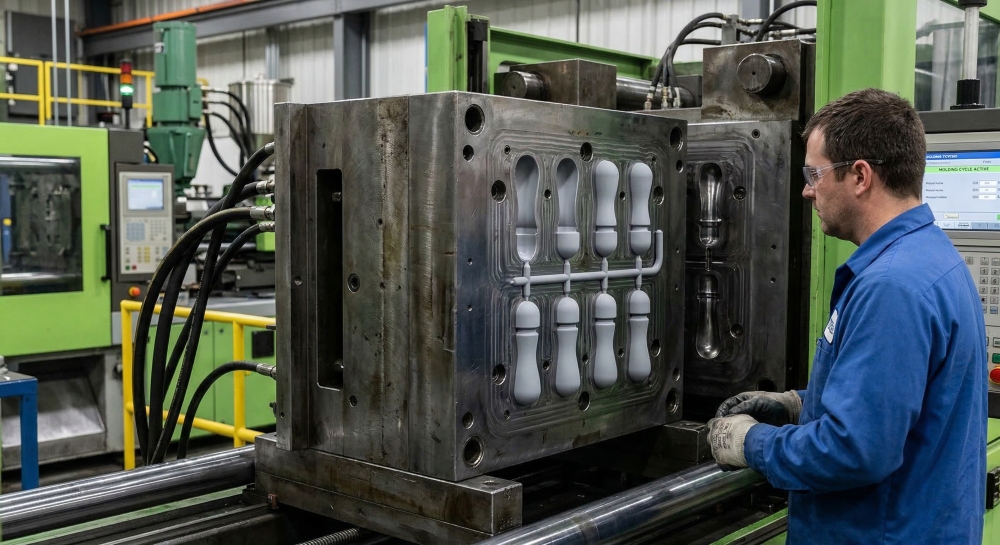
Modern adult product factories can achieve a wide range of hardness levels thanks to advances in polymer materials science. The main materials used are silicone and thermoplastic elastomers (TPE/TPR). By adjusting the formulas, our factory can change their physical properties like magic.
Silicone Materials
Silicone is the most popular high-end material in the industry. Before it's molded, it's a liquid (usually divided into two parts, A and B). The key to adjusting silicone hardness is controlling its cross-linking density.
Here are three key technical aspects of adjusting silicone hardness:
1.Changing the Microstructure: Molecular Chains and Cross-linking Points
The essence of silicone is a network of countless long chains. We can change the hardness by adjusting the state of these "chains."
Long Molecular Chains: When the silicone molecules have longer chains, they have more room to move, resulting in a softer, more stretchable material.
Cross-linking Density: There are connection points (cross-linking points) between the molecular chains. If the connection points are very dense, the molecular chains are locked tightly, forming a close-knit grid, and the silicone becomes very hard. Conversely, reducing the connection points makes the silicone soft and flexible.
2.Plasticizer Adjustment: Injecting "Lubricant"
To give silicone a texture close to human fat or skin, we often add silicone oil.
Principle: Silicone oil molecules squeeze between the silicone's molecular chains, providing physical separation and lubrication. It allows the originally compact molecular chains to slide easily.
Effect: The higher the proportion of silicone oil added, the lower the silicone's hardness (Shore 00 level). This not only reduces hardness but also gives the product a "fleshy" and smooth feel. However, adding too much can cause the product surface to "bleed" oil.
3.Filler Reinforcement: Adding a "Support Skeleton"
If we need to increase the toughness and hardness of silicone, we introduce filler particles such as silica (white carbon black).
Principle: These tiny particles fill the gaps between the molecular chains and form a strong bond with the molecular chains.
Effect: They are like adding tiny supports to soft tissue, which not only significantly increases the hardness of the silicone but also enhances the material's tear strength, preventing the product from breaking under severe stretching.
Adjusting silicone hardness is an art of balance. To make it softer: reduce cross-linking points, add more silicone oil. To make it harder: increase cross-linking points, add silica. To make it durable: while ensuring hardness, improve tear resistance by optimizing the filler ratio.
TPE/TPR Materials
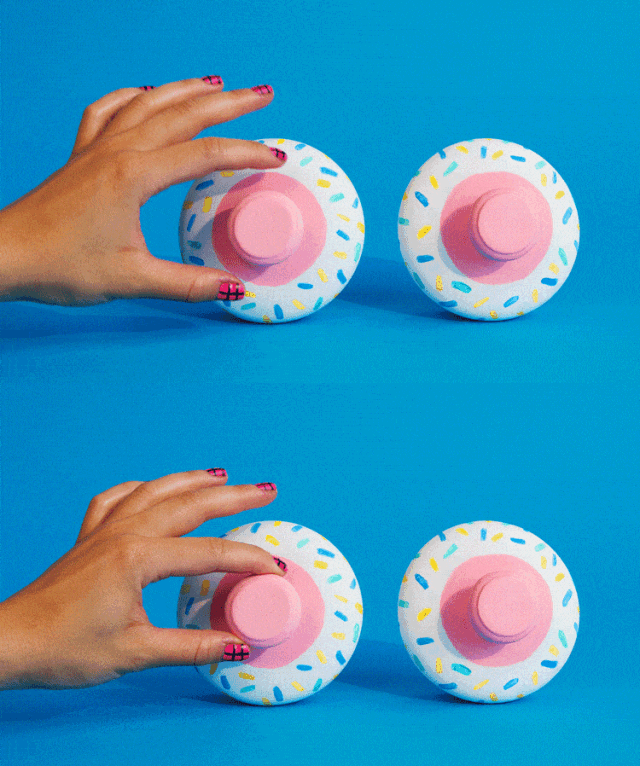
TPE (thermoplastic elastomer) and TPR (thermoplastic rubber) are extremely widely used materials. Their biggest advantage is that they combine the efficient processing performance of plastics with the flexibility and elasticity of rubber, and the production cost is more advantageous than silicone. These materials are highly transparent, easy to color, and can achieve an extremely soft and highly stretchable feel.
Adjusting the hardness of TPE/TPR mainly relies on precise fine-tuning of the formula ratio. Here are three core methods to achieve the transition from ultra-soft to high hardness:
1.Adjusting Polymer Components: The Ratio of Hard Segments to Soft Segments
TPE materials are microscopically composed of hard segments (providing strength and shape) and soft segments (providing elasticity and softness).
Increasing the Proportion of Soft Segments: When we increase the proportion of rubber components (such as SEBS or SBS base materials) in the formula, the molecular chains of the material become looser, resulting in a softer texture and extremely strong resilience.
Increasing the Proportion of Hard Segments: Increasing the content of plastic components (such as polypropylene PP or polystyrene PS) will form a stronger support network inside the material, thereby increasing hardness and compressive strength.
2.Adding Plasticizers: The Regulatory Effect of Paraffin Oil
Paraffin Oil is the most commonly used softening tool in TPE/TPR production.
Reducing Hardness: Paraffin oil molecules penetrate between the polymer chains, reducing the friction between molecules. The more oil added, the lower the material's hardness (Shore 00 level). In this way, we can create products that slowly rebound after being pressed and have an extremely smooth touch.
Physical Impact: It should be noted that the proportion of oil will directly affect the transparency and adsorption of the material. Although TPE with high oil content is extremely soft, if the formula is not balanced properly, oil may bleed out during storage.
3.Introducing Functional Fillers: Enhancing Density and Hardness
In order to change the physical properties of the material or reduce costs, mineral powders such as calcium carbonate and talc are often added during production.
Improving Hardness and Stability: The addition of fillers will occupy the gaps between molecules, restricting the free movement of molecules, thereby significantly improving the material's hardness, specific gravity, and dimensional stability.
Appearance Changes: Fillers usually make the originally transparent TPE opaque, presenting a matte or solid color visual effect. Increasing the proportion of fillers is a common solution for products that require a certain supporting weight (such as large bases).
The logic of adjusting TPE/TPR hardness is very clear. To pursue extreme softness, reduce the proportion of hard segments and greatly increase the content of paraffin oil; to pursue supporting strength, increase the proportion of hard segments and add filler powders such as calcium carbonate. To pursue balance, fine-tune the oil and powder ratio to ensure that the hardness meets the standard while avoiding oil bleeding or tensile fracture of the material.
Dual-Hardness Process: The Ultimate Solution for Hard Inside and Soft Outside
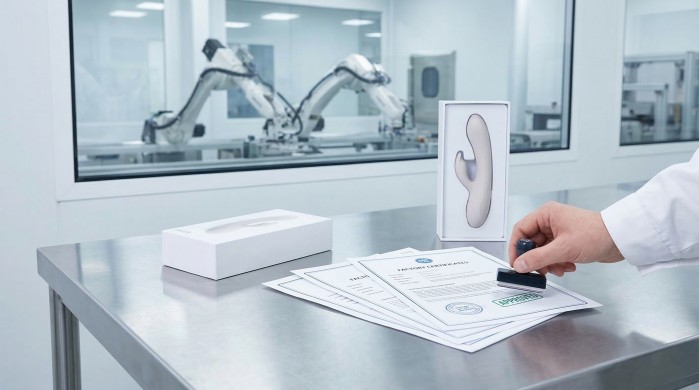
Sometimes, a single hardness level isn't enough. For example, a realistic sex toy needs both the support of a skeleton and the soft feel of skin. In this case, factories use two-color injection molding or overmolding.
This manufacturing method achieves multi-layered touch through the following steps:
1.Injection Molding of a Stable Structural Center
The factory first uses a high-hardness material, such as high-strength ABS plastic or hard silicone with a hardness level of 60 degrees or more, to injection mold a solid internal core. The role of this part is to provide a structural basis for the entire product, ensuring that the product can maintain its preset shape when subjected to force and will not affect the use effect due to large bending.
2.Composite Wrapping of a Soft Outer Layer
The completed structural core is transferred to another larger mold cavity. At this stage, the factory injects liquid silicone or TPE material with extremely low hardness around the core. These flowing soft materials will fill the mold gaps, completely covering the hard core, forming a thick and highly elastic buffer layer.
3.Material Fusion and Integrated Molding
Under the action of high temperature and pressure, the outer soft rubber will produce intermolecular physical engagement or chemical bonding with the inner hard core. After cooling and solidification, the two parts will be tightly combined into an inseparable whole.
The product produced in this way has extremely soft tactile feedback on the surface, which can gently fit the human body, while the center has reliable supporting rigidity. This process not only improves the user experience of the product, but also greatly enhances the durability of the product, preventing the outer soft rubber from peeling or deforming during long-term stretching or cleaning.
Conclusion: The Inclusive Philosophy Behind Hardness
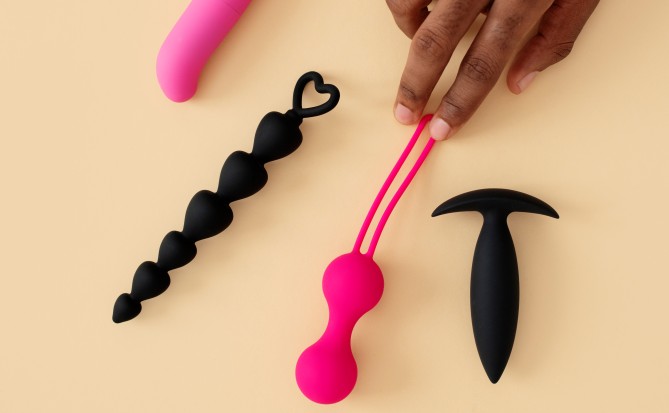
The diversity of hardness levels in adult products is not only a technological advancement but also reflects a respect for the diversity of human sexual experiences. From ultra-soft to ultra-hard, each option represents recognition of different needs, different bodies, and different moments. This segmentation makes products no longer one-size-fits-all tools but truly personalized experiences.
The diversity of sex toys reflects the rich spectrum of human sexual experience. With the joint efforts of material scientists, designers, and engineers, the adult product industry is quietly promoting cultural progress in sexual health and sexual pleasure through such detailed innovations.
We are Mroow, an experienced adult toy factory. If you want to customize adult products with different hardness levels, please feel free to contact us. We have a professional team of designers and engineers to help you realize your ideas!
Integrating Electrostatic Ion Balls into Adult Novelties: A Blush Rattle Snake Case Study
Hot Products
Dog Dildo with Raised Veins
...
Fantasy Knotted Horse Dildo
...
Multiple Knots Horse Dildo
...
Fantasy Butt Plug with Veins
...
Thick Knot Octopus Suckers Dildo
...
Ribbed Alien Tentacle Dildo
...
9.8" Silicone Tentacle Dildo
...

Tentacles and Raised Knot Dildo
...

Animal Egg Shaped Anal Plug Set
...

Inflatable Fantasy Monster Dildo
...
Hot News
Why Sex Toys Have Different Hardness: How to Achieve It?
When customers buy sex toys, the feel and sensation are key to a great experienc....

Integrating Electrostatic Ion Balls into Adult Novelties: A Blush Rattle Snake Case Study
With the technological evolution in the adult product industry, one-directional ....

API EXPO 2026 Shanghai: Overseas Visitor Guide & Checklist
As a professional platform for global exchange in the adult products industry, A....

No Brazil Customs Clearance? Why Chinese Sex Toy Factories Suggest Local Wholesale
For entrepreneurs looking to enter the Brazilian adult toy market, importing dir....

Why Is the Minimum Order Quantity So High for Custom Adult Toys?
New entrepreneurs often come to me, asking: "I want to create my own brand. Can ....

Why is Shipping So Expensive for Newbie Adult Toy Wholesalers? (Plus Practical Saving Tips)
Many newcomers looking to get into the adult product sales industry often only f....
Legal Regulations and Compliance Requirements for Wholesale Sex Toys
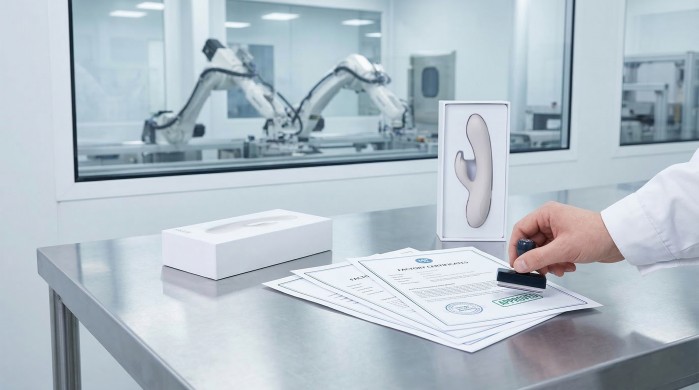
Many newcomers, when they see terms like "EU CE," "US FDA," or "REACH testing," ....

Want to Launch Your Own Sex Toy Brand? What Support Can Manufacturers Offer?
Learn about the support sex toy manufacturers can offer when launching your own ....

We-Vibe How Promotion on Social Media and Ads
With the rise of e-commerce and social media platforms, marketing has become ess....

What Kind of Girls Use Sex Toys?
Yesterday while surfing the internet, I came across this statement: girls who us....
New products
Dog Dildo with Raised Veins
...
Fantasy Knotted Horse Dildo
...
Multiple Knots Horse Dildo
...
Fantasy Butt Plug with Veins
...
Thick Knot Octopus Suckers Dildo
...
Ribbed Alien Tentacle Dildo
...
9.8" Silicone Tentacle Dildo
...
Tentacles and Raised Knot Dildo
...
Animal Egg Shaped Anal Plug Set
...
Inflatable Fantasy Monster Dildo
...